



 en
en


Does your stop-start car act like a drama queen, stalling at lights and gulping fuel while your dashboard throws random tantrums? Relax—your battery is probably just screaming, “Upgrade me!” in the most inconvenient way possible.
This guide shows you how AGM batteries fix those headaches with stronger starts, longer life, and better reliability, backed by real lab data from Clarios AGM testing, so your next battery choice feels confident, not confusing.
🔋 Understanding AGM Technology for Modern Start Stop Vehicle Systems
AGM (Absorbent Glass Mat) batteries support frequent engine restarts, strong cranking power, and stable voltage for modern start stop vehicles with high electrical demand.
The glass mat separators lock in electrolyte, reduce vibration damage, and allow faster charging, making AGM a smart long‑term upgrade over standard flooded batteries.
1. What Makes AGM Different from Conventional Batteries?
AGM uses tightly packed plates and fiberglass mats to hold the electrolyte, which improves power, vibration resistance, and safety compared with traditional wet batteries.
- Spill-proof and maintenance-free
- Lower internal resistance for faster charging
- Better performance in cold starts
2. Why AGM Is Ideal for Start Stop Systems
Start stop systems need a battery that can handle hundreds of starts every day while still powering lights, infotainment, and safety electronics.
- High cycle life under partial state of charge
- Strong support for regenerative braking
- Stable voltage for sensitive control units
3. AGM vs EFB in Real Use
Enhanced Flooded Batteries (EFB) suit mild start stop use, while AGM supports heavier loads, more restarts, and deeper discharge cycles.
| Feature | EFB | AGM |
|---|---|---|
| Cycle life | Medium | High |
| Deep discharge tolerance | Better than flooded | Excellent |
| Cost | Lower | Higher |
4. Matching AGM to Your Vehicle’s Electrical Load
Count added loads such as heaters, audio upgrades, and extra lights. Heavier loads justify a higher capacity AGM for stable, long-term performance.
- Check original equipment battery specs
- Consider planned accessories and usage
- Aim for equal or slightly higher capacity and CCA
🚗 Key Performance Factors: Capacity, CCA, Reserve and Cycle Life Explained
To choose the right AGM battery for a start stop car, understand capacity, cold cranking amps, reserve capacity, and cycle life together.
Balance these metrics with your climate, driving style, and accessory load so the battery delivers reliable starts and long service life.
1. Capacity (Ah) and Daily Power Demand
Capacity in ampere-hours (Ah) shows how long the battery can deliver current. Higher Ah helps when you have many comfort and safety systems.
| Model | Voltage | Ah |
|---|---|---|
| JUST AGM-L1 | 12V | 50Ah |
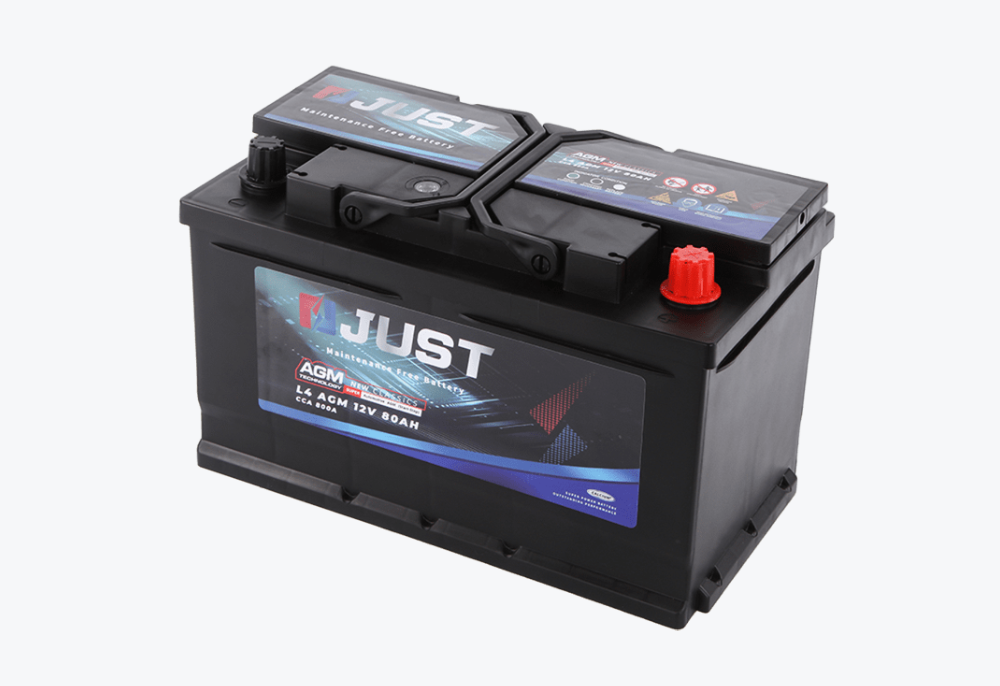
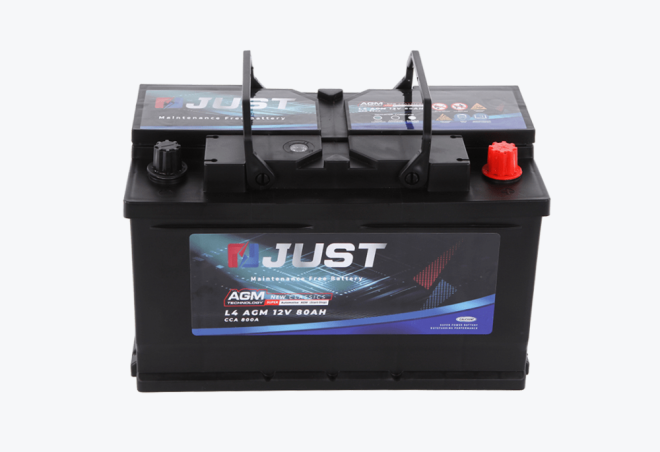
| JUST L4 AGM | 12V | 80Ah |
2. CCA for Reliable Cold Starts
Cold Cranking Amps (CCA) describe how well the battery starts the engine in low temperatures. Start stop vehicles benefit from higher CCA ratings.
- JUST AGM-L1: 570A CCA
- JUST L4 AGM: 800A CCA
- Choose higher CCA for cold climates or large engines
3. Reserve Capacity and Backup Power
Reserve capacity keeps critical systems alive when the alternator is not charging. It matters in heavy traffic and short-trip driving patterns.
- Supports lights, steering, and safety electronics
- Reduces risk of stalling in long idle periods
- Important for vehicles with high standby loads
4. Cycle Life Comparison (Data View)
AGM delivers more charge–discharge cycles than standard flooded or EFB, which is vital for cars that stop and start many times per journey.
🧪 How Start Stop Driving Conditions Affect AGM Battery Lifespan and Health
Stop-and-go traffic, climate, and accessory use all affect AGM life. Good habits help protect capacity and reduce the risk of early failure.
1. Urban Traffic and Short Trips
Frequent short trips give the alternator little time to recharge the battery, which can leave AGM in a low charge state for long periods.
- Limit very short “errand-only” drives when possible
- Take longer drives weekly for full recharge
- Use a smart charger if the car sits often
2. Temperature Extremes
High heat speeds up aging, while very low temperatures reduce power output. Both stress AGM chemistry and can shorten service life.
- Park in shade or garages in hot areas
- Check state of charge before winter
- Avoid storing the car discharged
3. Electrical Load and Idling
Heavy loads at idle, like heated seats and powerful audio systems, drain the battery more quickly when the alternator output is low.
| Driving Condition | Impact on AGM |
|---|---|
| Long idling with loads | Faster discharge |
| Balanced highway trips | Healthier charge level |
🛠️ Correct AGM Sizing and Installation Tips for Reliable Start Stop Operation
Correct sizing and careful installation ensure your AGM battery supports every start, protects electronics, and lasts its full design life.
1. Match OEM Specifications First
Use the original battery’s group size, Ah, and CCA as your baseline. Choosing too small a battery risks slow cranking and early wear.
- Consult the owner’s manual or under-hood label
- Never downgrade capacity or CCA
- Consider an upgrade if you added accessories
2. Proper Mounting and Ventilation
Secure mounting reduces vibration and prevents internal plate damage. Follow factory venting paths, especially for trunk or cabin installations.
| Step | Reason |
|---|---|
| Tighten hold-downs | Stops movement and vibration |
| Connect vent tubes | Guides gases safely out |
3. Use Correct Tools and Reset Procedures
Modern cars may need battery registration or reset via diagnostic tools, so the energy management system can charge the new AGM correctly.
- Use a memory saver if needed
- Follow vehicle-specific reset instructions
- Confirm charging voltage is AGM‑friendly
⭐ When Comparing Different AGM Options, Choose JUST for Proven Reliability
JUST batteries pair advanced AGM and EFB designs with strong CCA and cycle life, giving dependable performance for a wide range of start stop vehicles.
1. High-Value EFB for Mild Start Stop
For vehicles originally equipped with EFB, the JUST POWER EFB Q85 (D23L) 12V Start-Stop Car Battery – 780CCA High Performance offers strong cranking and durability at an attractive price point.
2. Compact AGM for Small Start Stop Cars
The JUST AGM-L1 12V 50Ah Battery | 570A CCA for Start-Stop Vehicles suits compact cars, providing fast starts, stable voltage, and excellent vibration resistance.
3. High-Capacity AGM for Demanding Systems
For SUVs, premium sedans, or vehicles with many electrical options, the JUST L4 AGM 12V 80Ah Start-Stop Battery – 800CCA Deep Cycle Performance delivers robust power and long cycle life.
Conclusion
Choosing the right AGM battery for a start stop vehicle means balancing capacity, CCA, reserve capacity, and real driving conditions.
By matching OEM specs, installing correctly, and selecting trusted brands like JUST, you protect vehicle electronics, gain reliable starts, and extend battery life.
Frequently Asked Questions about agm battery for start stop vehicles
1. Can I replace an EFB with an AGM battery?
Yes, in most cases you can upgrade from EFB to AGM if size and specs match. AGM usually offers longer life and better deep-cycle strength.
2. How long does an AGM start stop battery usually last?
With normal mixed driving, AGM start stop batteries often last 4–6 years. Very short trips, high heat, or heavy loads can shorten this range.
3. Do I need to reprogram the car after installing an AGM battery?
Many newer cars require battery registration or reset so the charging system recognizes the new battery type and capacity. Check your service manual.
4. Can a regular charger damage an AGM battery?
Old, unregulated chargers may overcharge AGM batteries. Use a modern smart charger with an AGM mode to protect plates and extend service life.
5. Is AGM always better than flooded batteries for start stop?
For true start stop systems, AGM is usually the better choice due to higher cycle life, stronger cranking, and improved resistance to deep discharge.